

43 Voices Against the US Blockade Against Cuba from the United Nations Podium
Condemnation of the U.S. blockade against Cuba once again took center stage in the general debate of the United Nations General Assembly. At least 43 heads of delegations—including presidents, prime ministers, and foreign ministers, as well as representatives from various countries participating in the high-level segment of the 81st session—included in their statements calls to lift the sanctions against the island and expressed concern about their consequences for the Cuban people.
From the United Nations podium, references to Cuba came from different regions and converged on the need to end the U.S. economic, commercial, and financial blockade and, in several cases, the energy blockade established in 2026, which prevents fuel from reaching Cuba and affects every aspect of the nation’s life.
Brazilian President Luiz Inácio Lula da Silva, who opened the general debate, expressed concern about the situation in Cuba and stated that the world is watching “with horror as collective punishment is imposed on 10 million people through an illegal economic and energy embargo.”
Namibian President Netumbo Nandi-Ndaitwah called from the UN podium for the lifting of “the unjustified economic embargo against Cuba,” highlighting its consequences for the Cuban economy and the well-being of the population.
“We call for an end to the energy blockade against Cuba and for its removal from the unilateral list of states allegedly sponsoring terrorism,” he added.
Solidarity with Cuba was particularly widespread among Caribbean countries.
Notable was the statement by Barbados’ Prime Minister, Mia Amor Mottley, who called for the Caribbean to be consolidated as a Zone of Peace and reiterated her country’s categorical rejection of the embargo and coercive measures against Cuba.
“We are deeply concerned about the worsening humanitarian pressures facing the Cuban people. Too many are suffering,” she stated, emphasizing the consequences of “restrictions on trade, finance, and access to fuel—all of which exacerbate the hardships, not only for Cuban citizens but for everyone who studies and lives there.”
The Bahamas, for its part, called for the lifting of the reinforced blockade against Cuba, an end to the fuel blockade, and Cuba’s removal from the U.S.’s unilateral list of state sponsors of terrorism.
In the case of Guyana, its president, Mohamed Irfaan Ali, stated: “We reiterate our call for a viable solution for Cuba—one that is peaceful, people-centered, development-focused, and allows for the full aspirations of the Cuban people to be realized. Guyana reiterates CARICOM’s offer to play a meaningful role in achieving this objective.”
Saint Lucia’s Prime Minister, Philip J. Pierre, stated: “Cuba has long been recognized for its consistent contribution to health, education, and development throughout our region and beyond. Saint Lucia stands in solidarity with the Cuban people in their hope for a better future, supported by the friendship and solidarity of the international community.”
In total, statements from Antigua and Barbuda, the Bahamas, Barbados, Belize, Grenada, Guyana, Jamaica, St. Kitts and Nevis, St. Lucia, St. Vincent and the Grenadines, and Suriname joined the expressions of solidarity with Cuba during the general debate.
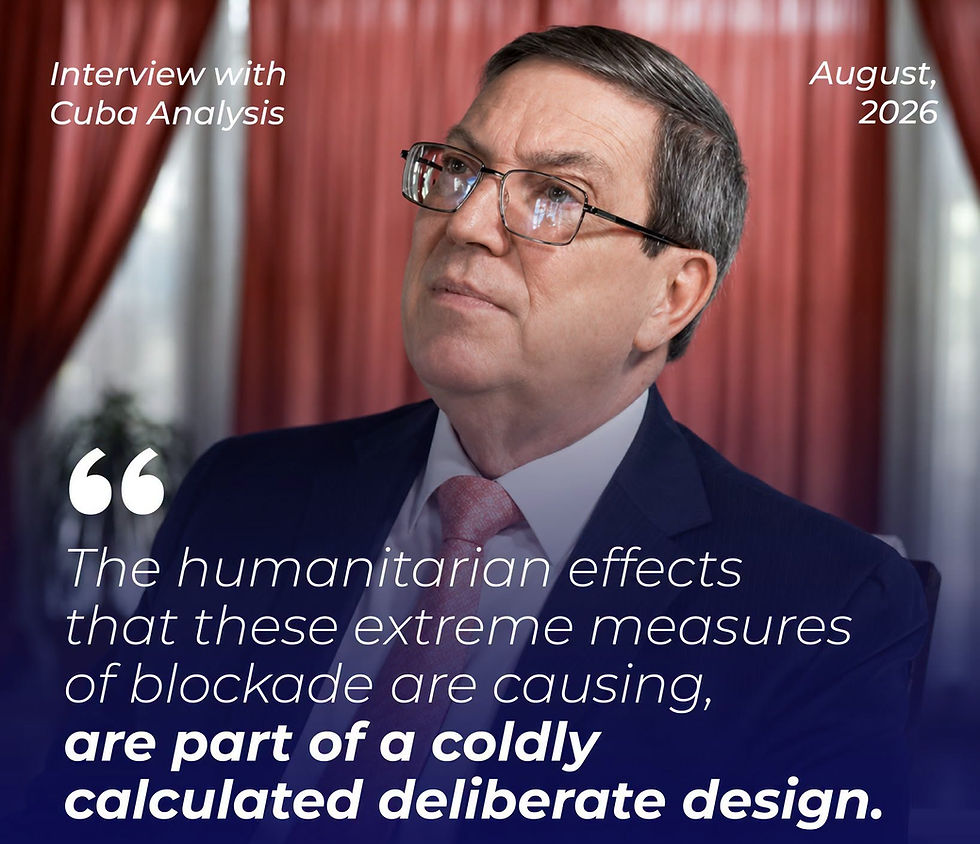
Cuba was represented at this debate by its Minister of Foreign Affairs, Bruno Rodríguez Parrilla, who carried out an extensive diplomatic agenda in New York.
In his address to the General Assembly, Rodríguez denounced that Cuba faces “multidimensional aggression” from the U.S. government and stated that this policy has intensified since January 2026 with new measures such as the fuel embargo.
As he explained, these measures have had effects that go beyond bilateral relations and affect third countries, companies, and commercial operations linked to Cuba.
“The impact of such a strict and ruthless blockade has a human face,” stated the Cuban foreign minister.
“The economic war is directed against the people. It falls upon the Cuban population as a whole. It claims lives, causes individual and collective pain, and generates anguish. It is not ‘collateral damage,’” he noted.
Rodríguez also warned the General Assembly about what he described as a persistent threat of the use of military force against Cuba and maintained that any aggression would have serious consequences for Cubans and Americans alike.
At the conclusion of his remarks, the Cuban foreign minister summarized Havana’s position with a phrase that has defined Cuban diplomacy during this session:
“Cuba is not a threat; the blockade is.”



Comments