

Dominica Signs PAHO/WHO Multi-Country Cooperation Strategy 2026–2031, Reaffirming Commitment to Resilient and EquitableHealth Systems
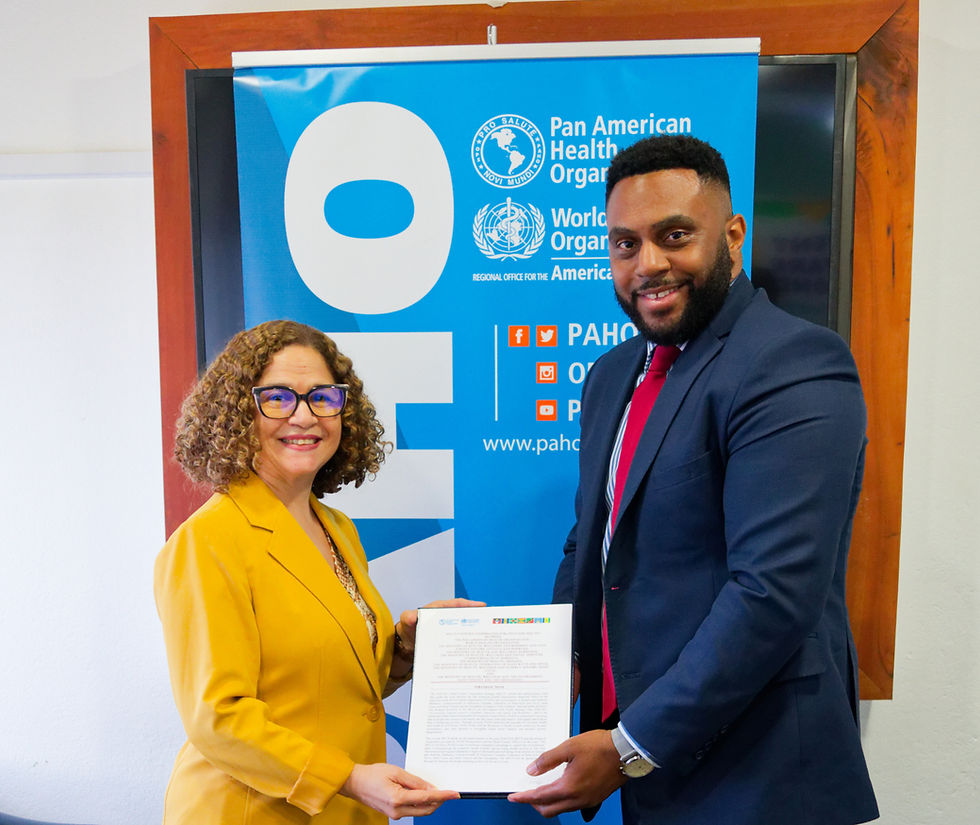
The Government of the Commonwealth of Dominica has officially signed the PAHO/WHO Multi-Country Cooperation Strategy (MCCS) 2026–2031 for Barbados
and the Eastern Caribbean, marking a significant milestone in regional health collaboration and reaffirming Dominica’s commitment to strengthening its health system through solidarity, equity, and resilience.
The MCCS 2026–2031 provides a medium-term strategic framework for advancing health and development across Antigua and Barbuda, Barbados, Dominica, Grenada, Saint Kitts and Nevis, Saint Lucia, and Saint Vincent and the Grenadines. Developed through extensive consultation with Member States, regional institutions, development
partners, and civil society, the strategy outlines a shared vision to confront emerging health challenges while ensuring people-centred, inclusive, and equitable care for all.
Speaking on the occasion of the signing, Permanent Secretary in the Ministry of Health, Wellness and Social Services, Dr Kyra Paul L’Homme, described the agreement as both timely and strategic for Dominica.
"The PAHO/WHO Multi-Country Cooperation Strategy 2026–2031 will significantly strengthen Dominica’s health system through improved primary health care, enhanced emergency preparedness, expanded human resources, digital transformation, and stronger prevention of communicable and noncommunicable diseases. In an uncertain global geopolitical environment marked by supply chain disruptions, health workforce challenges, and evolving health security risks, the Strategy reinforces resilience, regional solidarity, and equitable access to reliable, high-quality health services for all Dominicans."
Dominica is strengthening its ability to respond to current and future health challenges while ensuring that no one is left behind. The strategy comes at a pivotal moment for the region, which continues to face a complex health landscape marked by high rates of noncommunicable diseases (NCDs), persistent infectious threats, and the increasing impacts of climate change and natural disasters.
Health systems across the region, including Dominica’s, are under structural pressure from workforce shortages and financing constraints that contribute to high out-of-pocket health spending. In response, governments have prioritized reforms such as strengthening primary health care, advancing national health insurance, integrating healthinformation systems, and investing in climate-resilient infrastructure, including through PAHO’s Smart Hospitals Initiative.
Dominica has greatly benefited from PAHO’s Smart Hospitals Initiative, with refurbishments already completed in LaPlaine, GrandBay and Portsmouth, while Mahaut and Wesley are scheduled for retrofitting.
The MCCS emphasizes solidarity and regional collaboration, leveraging integration mechanisms such as the Organisation of Eastern Caribbean States (OECS) and CARICOM, and is grounded in the principles of equity, resilience, and sustainability.
The Government of Dominica looks forward to continued collaboration with PAHO/WHO and regional partners in translating the strategy into meaningful action and measurable health gains for the people of Dominica and the wider Eastern Caribbean.


Comments